Share Now
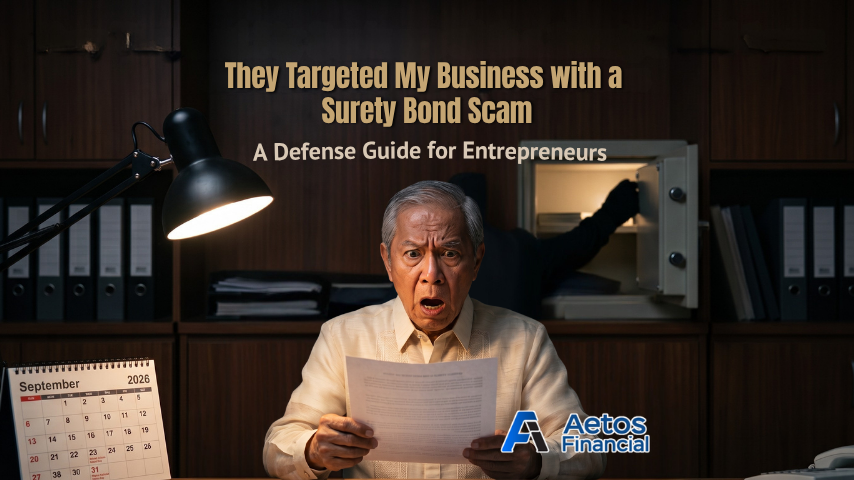
A friend recently approached me about a surety bond offer from a third-party provider. The deal looked straightforward: pay 1% of a ₱65 million obligation to secure the bond needed for a contract. The contact appeared professional and the terms tempting. When he insisted on an official written contract and direct confirmation from a licensed insurer, the provider hesitated, delayed, and then became unreachable.
This is a classic pattern in surety-related fraud. Businesses that need bonds for government contracts, construction projects, or regulatory compliance often face urgency. Fraudsters exploit that pressure by posing as brokers or providers, collecting premiums, and delivering either worthless documents or nothing at all.
This happens more often than people think. When a business wins a contract or needs a bond for a government or client requirement, scammers move in. They act like helpful brokers, collect money, and give fake papers or nothing at all.
AI makes these scams better. Fraudsters now use AI tools to create clean websites, official-looking bond forms, and professional emails. They can even copy voices or faces for calls and video meetings. The fake materials look real enough to fool busy business owners.
____________________________________________________________________________________
How Surety Bonds Actually Work
A surety bond is a three-party agreement. The principal, in this case your business, obtains the bond to guarantee performance or compliance to the obligee, the client, landlord, or government agency. The surety, a licensed insurance company, stands behind the guarantee.
If your business fails to meet its obligations, the surety may pay the obligee and then seek recovery from you. The bond protects the obligee, not you. It is not insurance that covers your losses. Legitimate bonds are issued only by insurers authorized by the Insurance Commission and must be verifiable directly with that insurer.
____________________________________________________________________________________
Why Entrepreneurs Become Targets
Founders often operate under tight deadlines after winning a contract or facing a regulatory requirement. Cash is constrained, dedicated risk staff is rare, and the preference is to move fast. Fraudsters know this. They offer quick approvals, attractive rates, and informal communication channels. Common tactics include unlicensed “providers,” reluctance to issue formal contracts, and requests for payment into personal accounts or e-wallets rather than the insurer’s official channels.
Documented cases of fraudulent surety bonds exist both internationally and locally. Regulators and industry groups repeatedly warn that bonds must be verified with the issuing surety and that unlicensed entities frequently issue documents that look official but carry no real backing.
____________________________________________________________________________________
Practical Steps to Protect Yourself
- Verify the broker, agent, and insurer before any payment or commitment. Confirm the insurer appears on the Insurance Commission’s current list of companies authorized to act as sureties.
- Obtain the bond directly from a licensed insurer or through a properly authorized intermediary. Avoid pure third-party “providers” who cannot produce clear documentation of their relationship with the surety.
- Require a Certificate of Insurance or formal bond document issued in the name of the licensed insurer, not merely a broker’s letter.
- Review every term carefully. Legitimate bonds contain specific bond numbers, clear parties, and verifiable details.
- Monitor the process and train anyone in your team who handles bonding or insurance procurement.
Real cases of fake surety bonds happen in many countries, including the Philippines. Regulators keep warning people: always double-check the bond with the insurance company itself. AI just helps the fakes look more professional.
____________________________________________________________________________________
Questions to Ask Before Committing with Any Broker
– Is the agent and the insurer officially licensed and currently authorized?
– Where will the premium actually be paid, and will I receive an official receipt from the insurer?
– Is the quoted rate realistic given the size and nature of the obligation?
– Have I seen the standard bond form and confirmed its details with the surety?
____________________________________________________________________________________
The Golden Rule of Premium Payments
Legitimate insurance and surety providers never collect premiums into personal bank accounts or personal e-wallets. Payments must go directly to the insurer through accredited channels, corporate accounts, or authorized cashiers, with an immediate system-generated official receipt.
If something feels wrong, delays on contracts, pressure to pay fast, or no way to confirm the bond, stop. Report it to the Insurance Commission and to the real insurance company whose name is being used
Treat surety bonds the same way you treat any other material business risk: with verification systems, not hope. The founders who avoid these traps insist on documentation, confirm licenses, and pay only through official channels.
____________________________________________________________________________________
Note on this guide:
This educational material is provided by Aetos Financial, an Insurance Commission-authorized agency that works with multiple reputable surety providers. If you need a properly issued surety bond, you can reach them directly:
____________________________________________________________________________________
SMS/Viber: 0991 431 4377
Facebook: Aetos Financial
Email: aetos@companysupport.net
Office Hours: Mon–Fri 9 AM–9 PM | Sat–Sun 9 AM–5 PM
____________________________________________________________________________________
References:
Kenton, Will. Investopedia. 2026. https://www.investopedia.com/terms/s/surety.asp
Moncraft, Bethan. Insurance Business. 2019. https://www.insurancebusinessmag.com/asia/news/breaking-news/surety-bonds–a-brief-introductory-guide-169527.aspx
Mangol, Edielyn.FinTechNewsPH.2026 https://www.linkedin.com/pulse/how-ai-scams-reshaping-financial-fraud-philippines-fintechnewsph-l8bxc/
InsuranceAsia.2025. https://insuranceasia.com/insurance/news/philippines-cracks-down-unauthorised-third-party-insurance-seller
What do you want to do next?

Evana Elaine P. Ortega is the Marketing and Client Success Officer at Aetos Financial, where she supports the company’s mission of helping Filipinos become more financially savvy. Drawing on her academic background in Entrepreneurship from the Asian Institute of Management, she explores the unspoken challenges and dilemmas faced by real family businesses.